
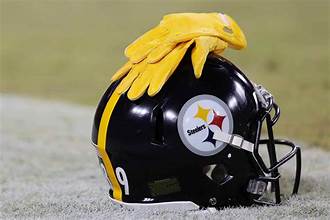
Stability or Catalyst?: What the Mike McCarthy Hire Really Means for Pittsburgh

The Steelers didn’t make a flashy hire. They made a familiar one. Mike McCarthy brings experience, structure, and a Super Bowl résumé — but also the same question that followed him in Dallas:

Does he raise your ceiling, or just protect your floor?

Why McCarthy Could Be a Good Fit

• He matches Steelers culture
Pittsburgh values structure, discipline, and professionalism. McCarthy runs stable programs and avoids chaos. That alignment matters for a franchise built on consistency.

• The offense needs a steady hand
Since Ben Roethlisberger retired, the Steelers have lacked identity on offense. McCarthy has a long history of quarterback-friendly systems and productive passing games. If the goal is competence and direction, this helps.

• He brings a high floor
McCarthy-led teams rarely implode. You’re likely getting competitive seasons, organized football, and playoff contention — which Pittsburgh expects as a baseline.

Why He Might Not Be Enough

• The playoff track record — team and coach — is concerning…

Over the last 10 seasons, the Steelers:
– Have made the playoffs 7Xs
-Have a 2–7 playoff record
-Have no playoff wins since the 2016 season

That’s nearly a decade of early exits or missing the dance. McCarthy’s own recent postseason history mirrors that pattern: good regular seasons, short January runs (4 trips to the playoffs, with a 2-4 record).

This hire feels built to maintain the status quo — not necessarily to break through.

• The AFC is built on offensive innovation
Mahomes, Allen, Burrow, Lamar — paired with aggressive play designers. McCarthy is respected, but he’s not viewed as a schematic edge-giver. “Solid” might not beat “explosive.”

• It’s a résumé hire, not a future hire
The league is trending younger and more creative. Pittsburgh leaned toward experience and familiarity instead of offensive evolution.

The Aaron Rodgers Factor
Here’s where things get interesting.

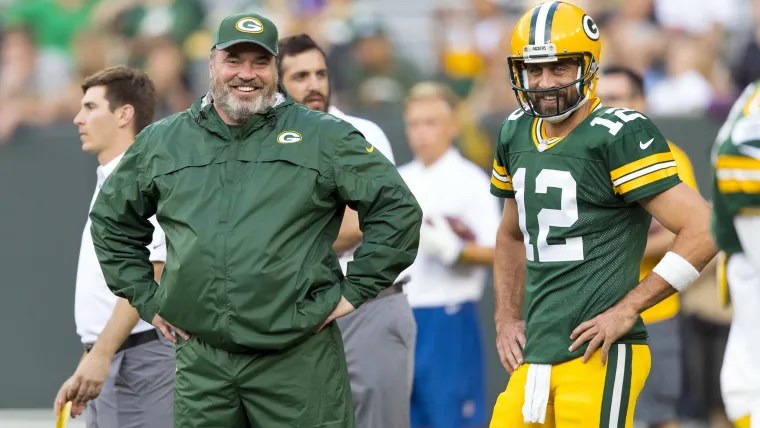
McCarthy and Rodgers spent 13 seasons together in Green Bay, amassing a 125-77-2 record and a win in Super Bowl XLV. The duo made the playoffs in nine of those 13 seasons together. That relationship — despite its ups and downs — carries credibility. If Rodgers is considering one last season, staying in Pittsburgh just became a more logical choice than it was a few days ago.

McCarthy offers:
A known system
A coach Rodgers has won with
A defense and organization built to contend

Would it be a long-term solution? No.
Could it be a one-year “let’s take a swing” scenario? Absolutely. Given Rodgers’ age, though, would it be worth it for the Steelers to bring him back? Or should they just move on and look for a young quarterback that can grow into their long-term cornerstone?

The Bottom Line

McCarthy likely maintains the Steelers’ floor.

BUT does he make them better? Pittsburgh’s real problem is a lack of growth and an inability to find the right quarterback. Without the right fit under center, I don’t know if McCarthy has what it takes to move the needle!

Right now, it feels safe.

What do you think?

The Economic Impact of Sports in the United States

Sports occupy a central place in American culture, but their influence extends far beyond entertainment. The sports industry represents a significant driver of economic activity, contributing to gross domestic product (GDP), generating employment, stimulating tourism, and fostering infrastructure development. From professional leagues to collegiate athletics and emerging sectors such as esports and legalized sports betting, the economic effects of sports in the United States are substantial and multifaceted.

Industry Size and Direct Revenue Generation

The U.S. sports industry is estimated to be worth over $500 billion annually, positioning it as one of the largest sectors within the entertainment economy (PwC, 2021). Revenues are derived from diverse sources, including ticket sales, broadcasting rights, corporate sponsorships, merchandising, and related tourism expenditures. Major events illustrate the magnitude of these effects. For instance, the Super Bowl alone has been estimated to contribute $300–500 million in direct spending to its host city, largely through visitor spending on hotels, restaurants, and transportation (Fort & Winfree, 2013; Matheson & Baade, 2016). Similarly, the NCAA’s March Madness tournament consistently generates billions in media and advertising revenue (NCAA, 2023).

Employment and Labor Market Contributions

Sports support employment across numerous sectors of the economy. While professional athletes represent the most visible labor force, the industry encompasses coaches, referees, athletic trainers, event staff, marketers, media professionals, and facility operators. Construction and maintenance of stadiums and arenas employ additional workers in architecture, engineering, and skilled trades. Beyond direct employment, related industries—such as apparel manufacturing, broadcasting, and digital streaming—benefit from the sustained demand generated by sports consumption (U.S. Bureau of Labor Statistics [BLS], 2023).

Tourism and Regional Economic Development

The tourism sector experiences notable benefits from sporting events. Cities that host mega-events, such as the Olympics or Super Bowl, attract large numbers of domestic and international visitors, boosting demand for hospitality services (Preuss, 2019). Even smaller-scale events, such as college football games in regional markets, significantly affect local economies. For many small college towns, athletic programs provide consistent streams of revenue for restaurants, hotels, and retail establishments (Humphreys & Mondello, 2008).

Media, Technology, and Digital Innovation

The economic impact of sports has been amplified by the growth of media and technology. Broadcasting rights constitute a major revenue source, with networks such as ESPN, Fox Sports, and NBC collectively paying billions of dollars to secure exclusive coverage of professional and collegiate competitions (Statista, 2023). Emerging technologies—including data analytics, virtual reality, and streaming services—have further expanded the sports economy by creating new consumer experiences and business opportunities (Ratten, 2020).

Sports Betting and Economic Expansion

The legalization of sports betting in the aftermath of the 2018 Supreme Court decision (Murphy v. NCAA) has transformed the financial landscape of the sports industry. In 2023 alone, legal sports betting generated more than $10 billion in revenue, contributing both to private-sector growth and to public finances through taxation (American Gaming Association [AGA], 2023). This sector has also stimulated ancillary industries, such as hospitality, technology development, and advertising.

Infrastructure and Community Development

Investment in sports-related infrastructure can have both immediate and long-term economic implications. The construction of stadiums, arenas, and training facilities requires significant capital and labor, producing short-term employment and infrastructure modernization. However, the long-term benefits of such investments remain debated, as public subsidies for stadium projects do not always yield proportional returns (Coates & Humphreys, 2008). Nevertheless, these projects frequently serve as catalysts for urban renewal and increased commercial activity (Rosentraub, 2010).

Conclusion

Sports represent a significant and complex component of the U.S. economy. Their influence extends beyond entertainment into critical areas of employment, tourism, media, technology, and infrastructure development. While debates persist regarding the equitable distribution of costs and benefits—particularly in the case of publicly funded stadiums—the aggregate impact of sports is undeniable. As new trends such as esports, legalized betting, and digital fan engagement continue to expand, the role of sports as an economic driver in the United States is likely to grow even further.