
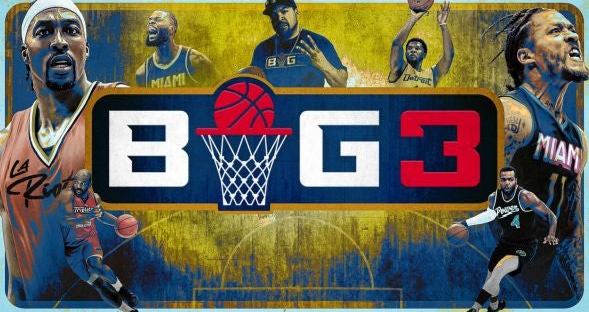
As the BIG3 season draws to a close, I started to wonder how others feel about the league. Admittedly, I have been much more interested this year than in any year since the inaugural season. Highlights and headlines featuring BIG3 content has crept into my feeds on Google and social media. I feel like I’m back in 2016 seeing names like Joe Johnson, Lance Stephenson, Micheal Beasley, and Dwight Howard prominently featured. I’m not convinced that I enjoy the BIG3, but I’m intrigued. How do you feel about it?
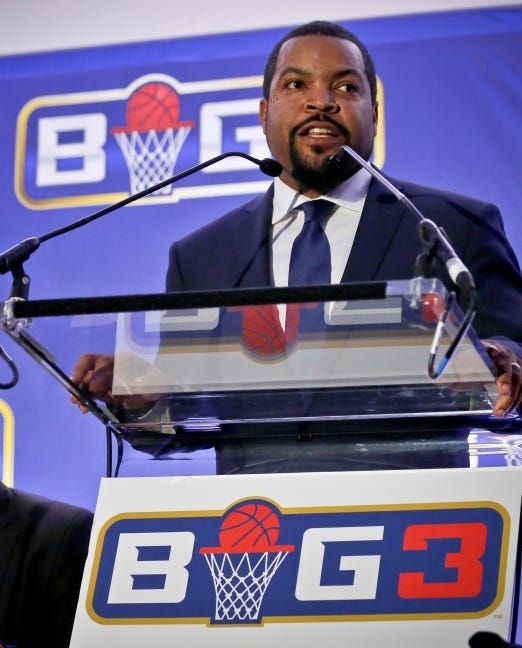
When Ice Cube first announced the BIG3 back in 2017, the idea sounded like a novelty—retired NBA players, half-court basketball, and a four-point shot that looked more like something from a video game than professional play. But nearly a decade later, the league is still standing, ratings are climbing, and it’s forcing basketball fans to ask: is the BIG3 a gimmick, or is it carving out a legitimate space in the sport?
Quality of Play: Nostalgia Meets Strategy
The BIG3 is not the NBA, and it doesn’t try to be. What it does offer is a different lens on basketball—a game distilled to its essence. No transition dunks or 94-foot sprints, but instead, half-court matchups where every possession is a battle of skill and positioning.
Some critics dismiss the play as “old men’s basketball,” but that underestimates the intensity. The shorter shot clock and smaller format strip away wasted motion. This is basketball where a single misstep means giving up a bucket. For purists, it’s a reminder that half-court play has always been the true test of basketball IQ.
The TV Product: Compact and Consumable
Half-court basketball looks different on television, and that’s part of the appeal. The camera never has to chase end-to-end action. The game feels tighter, quicker, and more digestible. A single broadcast can package multiple games, offering variety that the NBA’s longer, drawn-out contests don’t.
Of course, not everyone is sold. Fans raised on LeBron chase-down blocks or Ja Morant fast breaks might find the product less electrifying. But for casual viewers—or for those craving summer hoops when the NBA is dormant—the BIG3 provides a compact, action-heavy alternative. The rising ratings on CBS suggest it’s not just a niche curiosity anymore.
For Retired Players: A Lifeline in the Spotlight
Where the BIG3 has its greatest impact is off the stat sheet. Retirement is cruel to athletes. One day you’re in the spotlight; the next, you’re forgotten. The BIG3 offers a second act.
For some, like Joe Johnson, it was a platform to prove he still belonged in the NBA. For others, it’s a paycheck, a chance to stay in shape, and most importantly, a way to keep that competitive fire burning. Beyond the court, the league has even invested in programs to support players with health, business, and career transitions—an acknowledgment of how hard life after the NBA can be.
In this way, the BIG3 isn’t just a league. It’s a rehabilitation center for careers, reputations, and identities.
The Bigger Question
So, where does the BIG3 fit? It will never rival the NBA in scale or spectacle. But maybe it doesn’t need to. Its value lies in being different: a laboratory for rule changes, a made-for-TV summer product, and a platform for players who refuse to fade into obscurity.
What started as a novelty has evolved into something else—a reminder that basketball doesn’t need to look like the NBA to matter. The BIG3 isn’t replacing the sport we know, but it’s reshaping how we think about its possibilities.
Do you think the BIG3 has the staying power to become a permanent fixture in basketball, or will it always be seen as a sideshow to the NBA?
 4603sports.com