Blog

Is It Time to End the Bill Belichick Experiment at UNC?

When the University of North Carolina made the shocking decision to bring NFL legend Bill Belichick to Chapel Hill, the move sent ripples throughout the college football world. Here was a six-time Super Bowl–winning head coach, one of the greatest defensive minds in football history, taking over a college program known for its basketball heritage and occasional gridiron flashes of brilliance.

The hire felt bold — a calculated gamble that Belichick’s discipline, precision, and football IQ could elevate the Tar Heels to consistent national relevance. But as the honeymoon period fades and the season’s realities set in, fans and analysts alike are beginning to ask a tough question: Is the Belichick experiment working?

While expectations were sky-high, results on the field have been mixed. The defense — as expected — has shown flashes of vintage Belichick brilliance. The Tar Heels have been sound in situational football and rarely beat themselves with penalties. But the offense has sputtered at times, struggling to find rhythm against top-tier ACC opponents.

Recruiting, too, has been a sticking point. Belichick’s NFL pedigree attracts attention, but his old-school approach doesn’t always resonate with 17-year-olds raised in the era of social media hype and NIL deals. In an age where personality and flash often drive recruiting momentum, the stoic, no-nonsense Belichick style might not be the best fit for college football’s modern ecosystem.

Leadership or Mismatch?

There’s no denying Belichick’s football genius — but college football isn’t the NFL. It’s a game of relationships, energy, and recruiting charisma as much as X’s and O’s. Belichick’s methodical, business-like approach may not translate as effectively in a locker room full of student-athletes balancing academics, NIL obligations, and youthful expectations.

Some boosters and fans love the structure and professionalism he’s brought to the program. Others argue that UNC’s identity has become too rigid, too corporate, and too disconnected from the excitement and pageantry that make college football special.

The Verdict? Still Pending.

It’s too soon to write the final chapter on Belichick’s tenure at UNC. Legends often need time to adapt. But the clock is ticking, and in the world of college sports — where patience runs thin and recruiting cycles move fast — every loss carries extra weight.

If UNC can’t find consistent success by the end of the season, tough conversations may have to be had. Was the Belichick experiment a bold innovation — or a mismatch between two very different football worlds?

What Do You Think?

Has Bill Belichick been the right fit for UNC football, or is it time to move in a different direction?
Share your thoughts in the comments!

End of Russ?…Dart Era Begins!

This week the NY Giants decided to bench Russell Wilson and start Jaxson Dart for the remainder of the season. With an 0-3 start can you blame them? Well, yesterday the Giants got there first win of the season. This is a good start to what Giants fans hope is a great era for Jaxson Dart.  With the offense struggling, Jaxson Dart definitely was an improvement getting 21 points. NY struggled getting touchdowns, but both sides of the ball definitely played inspired football. This leads to another question. Is this the end of Russell Wilson’s career? He struggled in Denver, got cut, and rookie Bo Nix got the Broncos to the playoffs the following season. Russ got to Pittsburgh, gets to the playoffs, but then loses the position to a 41 year old Aaron Rogers. Now in NY, Russ struggles again and loses the starting job to another rookie in Dart. Russ said he can still play but it’s not showing up on the field. Is it time to call it quits and spend time with Ciara? Most men would probably say yes, but Russ needs to do some soul searching and see if Russ can still cook.

What do you think? Sound off in the comments section and dont forget to subscribe to receive notifications when we post new content!

Bill Russell: The Greatest Winner in American Team Sports

I grew up in the 90s, so if you ask me who the greatest individual player in NBA history is, there is only one answer….Michael Jeffery Jordan! When the conversation turns to the greatest champion in American team sports however, one name towers above all, even Michael: Bill Russell! More than just a Hall of Fame center for the Boston Celtics, Russell became the gold standard for winning — not only because of his unmatched collection of championships but also because of the leadership, resilience, and determination he displayed in an era defined by both opportunity and adversity.

There was a running joke for years between a good friend and me whenever we saw Bill Russell on TV during the 2000s and early 2010s. He always seemed like the classic “get off my lawn” guy. Nothing anyone did in the modern era ever seemed good enough for him. But after looking back and analyzing his remarkable career, I can imagine he genuinely felt that way—and to some degree, I can understand why.

A Legacy Etched in Championships

Russell’s resume is staggering. In 13 seasons with the Celtics (1956–1969), he captured 11 NBA championships, the most by any player in league history. To put that in perspective, no other superstar across the NBA, NFL, MLB, or NHL has matched that level of team success in such a short span. He was also a five-time MVP, a 12-time All-Star, and widely regarded as the anchor of the greatest dynasty professional basketball has ever seen.

What set Russell apart wasn’t just the number of rings but the consistency with which he won. The Celtics dominated the late 1950s and 1960s, with Russell serving as the heart of a team that valued defense, unselfishness, and trust. He understood that winning was about sacrifice, and he made his teammates better by doing the dirty work — rebounding, blocking shots, and orchestrating the defense.

Winning Beyond the Stats

Russell’s greatness wasn’t measured solely in numbers. His will to win, particularly in pressure-packed moments, separated him from even the best of his peers. In 10 career Game 7s, Russell never lost. His ability to rise when the stakes were highest became a defining feature of his career and cemented his reputation as the ultimate competitor.

Moreover, Russell won at every level: two NCAA championships at the University of San Francisco, an Olympic gold medal in 1956, and those 11 NBA titles. Few athletes in history have achieved such universal success.

Leadership On and Off the Court

Russell’s legacy extends beyond basketball. He became the NBA’s first Black head coach when he took on a player-coach role for the Celtics in 1966 — and in that role, he won two championships. Off the court, he was an outspoken advocate for civil rights, using his platform to stand for justice and equality during one of the most turbulent periods in American history.

In many ways, his impact as a winner went beyond games and trophies. He showed that true leadership means lifting others, setting standards, and inspiring change both on the hardwood and in society.

Why Russell Stands Alone

Great athletes like Michael Jordan, Tom Brady, Wayne Gretzky, and Babe Ruth have all made their case for being the greatest in their respective sports. But when it comes to pure winning, none match Bill Russell’s record of dominance. His 11 championships in 13 seasons remain the ultimate benchmark of success in American team sports.

Russell himself often downplayed the idea of being the “greatest,” insisting instead that winning was a collective effort. Yet it’s precisely this humility, along with his relentless competitiveness, that underscores why he is revered as the ultimate champion.

Bill Russell didn’t just win — he defined winning. His career stands as a reminder that greatness isn’t measured by personal accolades alone but by how much you elevate those around you. In that sense, Russell remains unparalleled. In the long history of American team sports, no one has ever embodied the essence of winning more completely than Bill Russell, the greatest champion of them all.

Panthers Blowout Falcons 30–0 for First Win of the Season

As a Panther’s fan, I don’t have much to celebrate these days! Lol, but I’m riding high today!!!

The Carolina Panthers delivered a statement win on Sunday, shutting out the Atlanta Falcons 30–0 at Bank of America Stadium. The victory not only gave Carolina its first win of the year (now 1–2) but also marked a rare shutout performance in today’s NFL.

Bryce Young managed the offense efficiently, completing 16 of 24 passes for 121 yards while adding a rushing touchdown. Running back Rico Dowdle also found the end zone, and kicker Ryan Fitzgerald was flawless, hitting all three of his field goal attempts—including a booming 57-yarder.

The defense stole the show. Cornerback Chau Smith-Wade returned an interception 11 yards for a score, while the unit held Atlanta to just 224 total yards and forced multiple turnovers. Falcons quarterback Michael Penix Jr. struggled, going 18-for-36 for 172 yards with two costly interceptions before being replaced late by Kirk Cousins.

Courtesy of Panthers_Statement Instagram Page

Carolina outgained Atlanta 332–224 in total yards, controlled the tempo, and shut the door in the red zone whenever the Falcons threatened. The result: a balanced team win that showed progress on both sides of the ball.

The Panthers now have momentum heading into Week 4—proof that when the offense avoids mistakes and the defense dominates, this team can be dangerous.

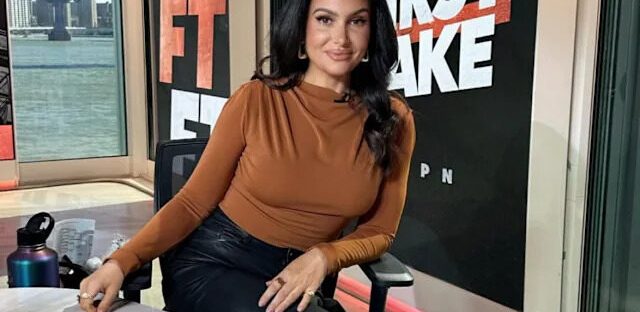
Molly Qerim Bids Farewell to ESPN

Fans first learned of Molly Qerim’s departure when Stephen A. Smith emotionally announced on First Take that she would be leaving the network at the end of 2025. His words made it clear how much she has meant to the show — not just as a colleague, but as a true professional who helped shape the program’s identity.

For nearly a decade, Molly has been the steady voice and guiding presence of First Take. From her start at ESPN in 2006 to stepping into the moderator chair in 2015, she brought balance, professionalism, and warmth to a stage often dominated by fiery debates. She knew when to step back, when to step in, and how to let personalities shine without letting chaos take over. That’s no small feat, and fans have noticed.

Her Instagram message reflected nothing but gratitude: to her colleagues, to ESPN, and to viewers who tuned in day after day. And that gratitude is mutual. Fans respect her professionalism, admire her perseverance (especially as she’s been open about her health battles with endometriosis), and appreciate the grace she brought to every broadcast.

While she hasn’t yet shared what’s next, Molly left us with a “stay tuned.”

But Molly’s exit also raises big questions for ESPN. Who will step in to fill her role? How will First Take adjust without her steady hand? And with so much turnover in sports media lately, fans can’t help but wonder: could more familiar faces be next to leave?

Molly Qerim’s Exit and Malika Andrews’s New Deal: Coincidence or Connection?

When Stephen A. Smith announced on First Take that Molly Qerim would be leaving ESPN at the end of 2025, fans were stunned. For nearly a decade, Molly has been the steady hand guiding the network’s flagship debate show. But her decision to decline a contract extension raised as many questions as it answered — and one question in particular keeps coming up: did Malika Andrews’s new multi-year deal with ESPN have anything to do with it?

What We Know for Sure

  • Molly Qerim is leaving on her own terms. She declined ESPN’s extension offer and said in her Instagram post that the news came out “earlier than I intended, and not in the way I hoped.”
  • Malika Andrews just secured her future at ESPN. The network locked her into a multi-year contract, ensuring her continued role as one of the faces of NBA coverage.
  • No one has said the two are directly linked. ESPN hasn’t made that claim, and neither has Molly herself.

Why Fans Connect the Dots

Sports fans are nothing if not perceptive, and the timing of these two announcements has people speculating. Malika Andrews’s star is rising fast, and ESPN clearly sees her as a centerpiece for years to come. Meanwhile, Molly Qerim is walking away from one of the most prominent desks in sports media.

What’s More Likely

While it’s tempting to frame Molly’s departure as a reaction to Malika’s deal, the evidence points elsewhere. Declining a contract extension suggests Molly had her own reasons — whether personal, professional, or financial. She’s been open in the past about health challenges and has worked an intense schedule for years. Sometimes a new chapter isn’t about competition; it’s about timing and priorities.

The Bigger Picture

What’s undeniable is that ESPN is in a season of transition. Big names are leaving, while some old ones are returning, new stars are being elevated, and the network is recalibrating. Molly Qerim stepping away and Malika Andrews locking in represent two sides of that shift.

Final Thoughts

So, did Malika Andrews’s new deal push Molly Qerim out? Probably not. But fans aren’t wrong to wonder if these moves signal ESPN’s changing priorities — and who might be next to make a move. As Molly said, “stay tuned.” What do you think??? Share your thoughts in the comments section!

NFL Daydream: One Game, One Position, One Team!

Every football fan has imagined it—stepping onto the field, hearing the crowd roar, and lining up against the best in the game. Just one shot to live out the dream.

So here’s the question: If you could play in the NFL for one game, what team would you suit up for, and what position would you play?

Would you be the quarterback launching deep passes, a wide receiver making highlight grabs, a linebacker dishing out hits, or even the kicker with the game on the line?

Drop your answers in the comments—I’d love to see which teams and positions fans choose. Would you go with your favorite team, or pick the franchise with the brightest lights? Let’s hear it!

Amari Cooper Retires, Ending a Decorated NFL Career

In a surprising turn, Amari Cooper announced his retirement today (Sept. 4, 2025)—just a week after re-signing with the Las Vegas Raiders. The five-time Pro Bowler said he “no longer has the desire to play,” ending his career on the eve of the season opener.

Cooper, 31, leaves behind an impressive résumé: 711 receptions, 10,033 yards, 64 touchdowns, and seven 1,000-yard seasons across 10 years with the Raiders, Cowboys, Browns, and Bills. Known for his sharp route running and consistency, he was one of the league’s most reliable wideouts of the past decade.

His sudden exit reshapes the Raiders’ receiver depth chart, putting added pressure on Jakobi Meyers, Tre Tucker, and rookies Donte Thornton Jr. and Jack Bech to step up.

While fans hoped for a storybook reunion in silver and black, Cooper’s decision closes the book quietly on a career that speaks for itself.

What do you think of Cooper’s decision to step away now? Should the Raiders be worried about their offense without him, or will younger receivers rise to the occasion? Share your thoughts in the comments below.

What in the Jerry’s World Just Happened?

Cowboy fans across the globe is in a state of shock and disbelief today. The cowboys trade what could potentially be one of the best defensive players of all time away and to a conference for at that. Is this really the lowest point for Jerry jones? He wants to play hard with his best players only to show that he carries a bigger stick than they do but at what cost? It’s clear Jerry comes before his players and of course winning, but really what player wants to play for an organization like that? meanwhile the Packers just elevated themselves as possible contenders for the NFC and cowboys… Well, looks like another losing season for them and they will be non-relevant for a Superbowl. As long as Jerry is running the show, the cowboys will never win another Superbowl title.

An Ode To Fantasy Football

On Sunday mornings, rosters set,
A battle brews on the internet.
Friends turned rivals, week by week,
Chasing glory, bragging rights to seek.

Quarterbacks sling, receivers soar,
Running backs rumble for yards and more.
Defenses clash, kickers decide,
A touchdown swing flips the tide.

Waiver wire whispers late at night,
Who to drop, and who’s the right bite?
Sleeper dreams and injury fears,
Echo through the fantasy tiers.

One moment you’re soaring, the king of the pack,
Next week you’re crushed by a Monday night sack.
But win or lose, there’s always the thrill,
Of chasing the crown with strategy and skill.

So here’s to the season, the laughs, and fun way of life.
Fantasy football, I love, but not more than my wife!

Who’s the Best Player in the WNBA Right Now?

I’ll admit—I haven’t always followed the WNBA closely, so I usually didn’t have much to say about it. But over the past two summers, the league’s coverage has skyrocketed. With more highlights, storylines, and big-time performances flooding sports media, it’s hard for any true sports fan not to get drawn in at least a little.

All that buzz had me asking some big questions: Who is the real face of the league? Who is the best of the best right now?

The WNBA in 2025 is stacked with talent, and the debate is more exciting than ever. Do you give the edge to proven dominance, two-way versatility, or a rising superstar? Let’s break down the top three names in the conversation—backed by their current-season stats.


A’ja Wilson: The Standard of Greatness

For years, A’ja Wilson has been the face of WNBA dominance, and she’s showing no signs of slowing down. The Las Vegas Aces star is averaging:

  • 23.1 points, 10.1 rebounds, 3.1 assists, 1.6 steals, 2.2 blocks per game
  • Shooting 49% from the field, 32.7% from deep, and 85% at the line

Wilson recently poured in 36 points and 13 rebounds in a win, reminding everyone why she’s already a three-time MVP. She’s the proven choice—the player you can always count on to deliver when it matters.


Napheesa Collier: The New Frontrunner

If Wilson is the standard, Napheesa Collier might be the one raising the bar. The Minnesota Lynx forward is having the best year of her career and is widely viewed as the frontrunner for 2025 MVP. Her averages:

  • 23.9 points, 7.6 rebounds, 3.4 assists, 1.8 steals, 1.6 blocks per game
  • Elite efficiency: 54% FG, 37.8% 3-PT, 90.7% FT

Collier has scored 30+ multiple times this year—including a 32-point, 9-rebound performance after returning from injury. With her all-around impact, it’s no wonder GMs gave her the majority vote in this season’s MVP projections.


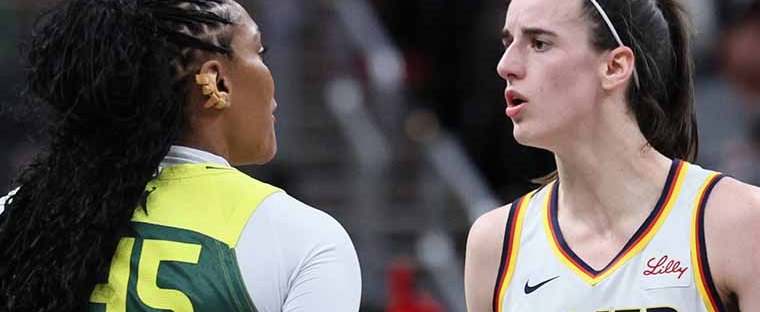
Caitlin Clark: The Future in the Making

Caitlin Clark hasn’t had the smoothest sophomore season, but even with injuries limiting her to just 13 games, she’s still a must-watch. For the Indiana Fever, she’s putting up:

  • 16.5 points, 8.8 assists, 5 rebounds, 1.6 steals per game
  • Efficiency: 36.7% FG, 27.9% 3-PT, 82% FT

Clark’s shooting has dipped, and injuries have slowed her momentum, but her ability to run an offense and fill arenas is undeniable. Even when she struggles, she moves the needle for the entire league.


The Verdict

So, who’s the best right now?

  • A’ja Wilson remains the safe pick—consistent dominance and the résumé to back it up.
  • Napheesa Collier looks like the MVP frontrunner, combining elite scoring, efficiency, and defense.
  • Caitlin Clark is the future face of the league, still learning but already rewriting records.

The truth? The WNBA is in an era where the answer might change week to week—and that’s what makes the league so fun to follow.


What do you think? Is Collier officially the top player, or does Wilson still hold the crown? And how long until Clark joins the conversation for good? Share your take—I’d love to hear it.

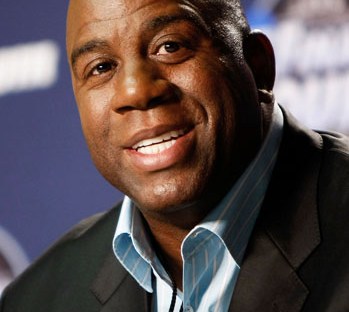
Reinventing the Game: Magic Johnson’s Rise From NBA Icon to Business Mogul

When most athletes retire, the biggest question is, “What’s next?” For Earvin “Magic” Johnson, the answer was never simply to fade into the background. Johnson transformed his legendary basketball career into a springboard for an even more remarkable journey in business. Today, he is celebrated not only as one of the greatest point guards in NBA history but also as one of the most successful entrepreneurs and investors of his generation.

From Showtime to Show Business

Magic Johnson was the engine of the Los Angeles Lakers’ “Showtime” era, dazzling fans in the 1980s with his unique blend of size, skill, and charisma. Over his 13-year career, he won five NBA championships, earned three MVP awards, and elevated the Lakers into a global brand. His ability to orchestrate plays and bring out the best in teammates was unmatched.

But while many athletes focus exclusively on the game, Johnson was thinking ahead. Even during his playing days, he paid attention to business opportunities, forming relationships with leaders in entertainment, hospitality, and finance. His natural leadership qualities and vision, once confined to the basketball court, would become the foundation for his next act.

Building an Empire: Magic Johnson Enterprises

In 1987, Johnson founded Magic Johnson Enterprises (MJE), a conglomerate that today is valued at over $1 billion. Rather than chase after flashy ventures, Johnson chose to invest in underserved urban communities. His philosophy was simple but groundbreaking: bring first-class products, services, and experiences to markets that had been historically overlooked.

One of his earliest major moves was partnering with Starbucks CEO Howard Schultz to open stores in inner-city neighborhoods. Skeptics doubted that Starbucks could succeed outside of affluent areas, but Johnson proved them wrong. His locations thrived, showing that residents in these communities were not only eager customers but loyal ones.

He replicated this model with Magic Johnson Theatres, which provided modern, safe, and upscale entertainment venues in areas where investment had long been scarce. These ventures demonstrated Johnson’s unique ability to merge profitability with social impact.

Expanding Into Sports Ownership

Johnson’s business portfolio didn’t stop with coffee and cinemas. He became a trailblazer in sports ownership, entering territories that few former athletes had touched. He is now part-owner of:

  • Los Angeles Dodgers (MLB) – Since 2012, Johnson has been part of the ownership group that revitalized one of baseball’s most storied franchises, guiding them to consistent playoff appearances and a World Series title in 2020.
  • Los Angeles Sparks (WNBA) – His investment in women’s sports underscored his commitment to inclusivity and growth in all corners of athletics.
  • Los Angeles Football Club (MLS) – As a founding investor, Johnson helped launch one of Major League Soccer’s most exciting new franchises.
  • Washington Commanders (NFL) – In 2023, Johnson joined the ownership group of the Commanders, making him one of the few individuals to hold stakes across four major U.S. sports leagues.

These ventures showcase his versatility and cement his influence across the entire sports landscape.

Diversifying the Portfolio

Beyond sports, Johnson has invested in real estate development, health care, technology, and media. His partnerships have included collaborations with Sony Pictures, investment firms, and urban development projects. Each move reflects a strategic blend of business savvy and community focus, reinforcing his reputation as more than a celebrity investor.

The Magic Formula for Success

So what explains Johnson’s seamless transition from athlete to mogul? The answer lies in the same traits that defined him as a player:

  • Vision – Just as he could see plays developing before anyone else on the court, he anticipated opportunities in markets others ignored.
  • Leadership – Johnson inspires confidence, whether he’s leading a fast break or a boardroom discussion.
  • Teamwork – He surrounds himself with skilled advisors and partners, understanding that collective success outweighs individual gain.
  • Charisma and Authenticity – Johnson’s natural charisma has allowed him to build trust with business leaders, politicians, and everyday people alike.

A Legacy Beyond Wealth

Perhaps the most remarkable part of Johnson’s business career is his emphasis on impact. He has created jobs, revitalized communities, and inspired countless athletes to view themselves as more than just entertainers. He has proven that the transition from sports to business can be more than a personal success—it can set a precedent for generations to follow.

The Game Never Ends

Magic Johnson’s life story is a testament to adaptability and vision. His greatest assists may not have been to Kareem Abdul-Jabbar or James Worthy, but to communities that gained opportunities through his investments and to athletes who now see a blueprint for life after sports.

From the hardwood of the Forum to the boardrooms of billion-dollar enterprises, Johnson has shown that the Magic Touch isn’t just about winning games—it’s about creating lasting value, influence, and change.

Shilo Sanders Cut by Buccaneers: One Punch, Big Consequences

The Tampa Bay Buccaneers didn’t waste time. Just a day after rookie safety Shilo Sanders was ejected from a preseason game for throwing a punch, the team waived him. Head coach Todd Bowles didn’t sugarcoat it—calling the act “inexcusable.”

For Sanders, the timing couldn’t have been worse. The 25-year-old, son of Hall of Famer Deion Sanders, was already fighting for a roster spot as an undrafted free agent. He showed flashes in preseason, making tackles and playing with energy, but he was stuck behind Antoine Winfield Jr. and other veterans. In short—he needed to be perfect.

Instead, a single moment may have defined his rookie year.

More Than Football

The stakes for Shilo go far beyond the field. He’s facing an $11.9 million judgment tied to a past lawsuit, along with bankruptcy proceedings. Making an NFL roster isn’t just a dream—it’s his clearest path to stability.

Still, all hope isn’t lost. Reports suggest Tampa Bay liked his presence and could bring him back on the practice squad if he clears waivers. His agents, Drew Rosenhaus and Robert Bailey, are also pushing for another team to take a chance.

My Take

Did the Buccaneers overreact? Maybe. Rookies make mistakes, and plenty of NFL players have survived worse. But in today’s league—where discipline and roster spots are razor thin—Shilo couldn’t afford even one slip.

Now his career hangs in the balance.

What do you think? Should the Bucs have cut him after one mistake, or does Sanders deserve another shot to prove himself?

BIG3 Basketball: More Than a Sideshow?

As the BIG3 season draws to a close, I started to wonder how others feel about the league. Admittedly, I have been much more interested this year than in any year since the inaugural season. Highlights and headlines featuring BIG3 content has crept into my feeds on Google and social media. I feel like I’m back in 2016 seeing names like Joe Johnson, Lance Stephenson, Micheal Beasley, and Dwight Howard prominently featured. I’m not convinced that I enjoy the BIG3, but I’m intrigued. How do you feel about it?

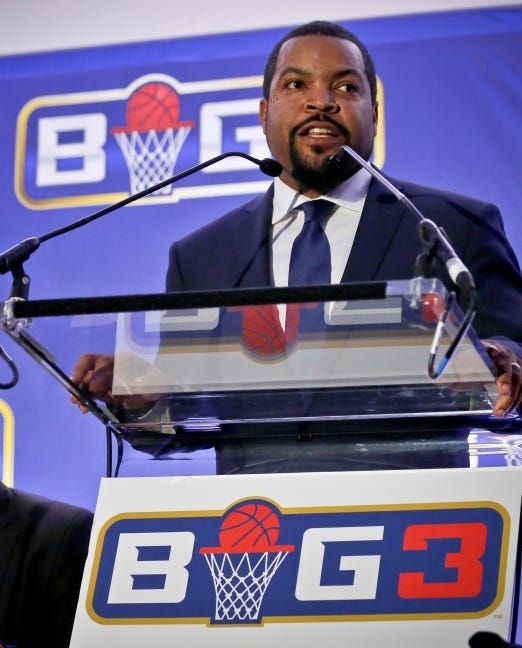
When Ice Cube first announced the BIG3 back in 2017, the idea sounded like a novelty—retired NBA players, half-court basketball, and a four-point shot that looked more like something from a video game than professional play. But nearly a decade later, the league is still standing, ratings are climbing, and it’s forcing basketball fans to ask: is the BIG3 a gimmick, or is it carving out a legitimate space in the sport?


Quality of Play: Nostalgia Meets Strategy

The BIG3 is not the NBA, and it doesn’t try to be. What it does offer is a different lens on basketball—a game distilled to its essence. No transition dunks or 94-foot sprints, but instead, half-court matchups where every possession is a battle of skill and positioning.

Some critics dismiss the play as “old men’s basketball,” but that underestimates the intensity. The shorter shot clock and smaller format strip away wasted motion. This is basketball where a single misstep means giving up a bucket. For purists, it’s a reminder that half-court play has always been the true test of basketball IQ.


The TV Product: Compact and Consumable

Half-court basketball looks different on television, and that’s part of the appeal. The camera never has to chase end-to-end action. The game feels tighter, quicker, and more digestible. A single broadcast can package multiple games, offering variety that the NBA’s longer, drawn-out contests don’t.

Of course, not everyone is sold. Fans raised on LeBron chase-down blocks or Ja Morant fast breaks might find the product less electrifying. But for casual viewers—or for those craving summer hoops when the NBA is dormant—the BIG3 provides a compact, action-heavy alternative. The rising ratings on CBS suggest it’s not just a niche curiosity anymore.


For Retired Players: A Lifeline in the Spotlight

Where the BIG3 has its greatest impact is off the stat sheet. Retirement is cruel to athletes. One day you’re in the spotlight; the next, you’re forgotten. The BIG3 offers a second act.

For some, like Joe Johnson, it was a platform to prove he still belonged in the NBA. For others, it’s a paycheck, a chance to stay in shape, and most importantly, a way to keep that competitive fire burning. Beyond the court, the league has even invested in programs to support players with health, business, and career transitions—an acknowledgment of how hard life after the NBA can be.

In this way, the BIG3 isn’t just a league. It’s a rehabilitation center for careers, reputations, and identities.


The Bigger Question

So, where does the BIG3 fit? It will never rival the NBA in scale or spectacle. But maybe it doesn’t need to. Its value lies in being different: a laboratory for rule changes, a made-for-TV summer product, and a platform for players who refuse to fade into obscurity.

What started as a novelty has evolved into something else—a reminder that basketball doesn’t need to look like the NBA to matter. The BIG3 isn’t replacing the sport we know, but it’s reshaping how we think about its possibilities.


Do you think the BIG3 has the staying power to become a permanent fixture in basketball, or will it always be seen as a sideshow to the NBA?

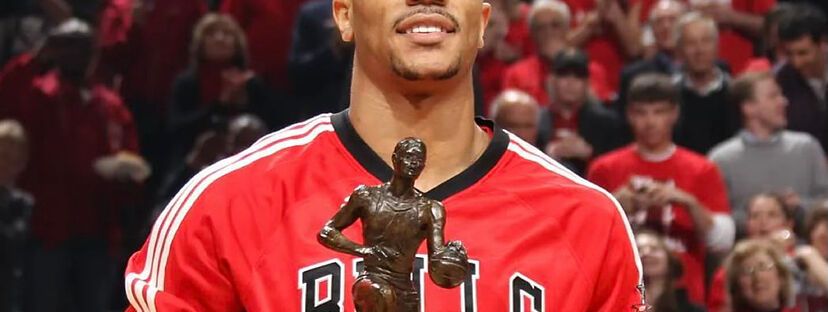
Derrick Rose’s Jersey Retirement: Greatness Honored or Legacy Rewarded?

News that Derrick Rose’s jersey will be retired has stirred a mix of emotions across the basketball world. For many fans, it’s a moment of celebration—an acknowledgment of one of the most electrifying talents of his era. For others, it raises questions about what truly merits the ultimate honor of jersey retirement.

Rose’s story is one of both brilliance and heartbreak. He became the youngest MVP in NBA history, a hometown hero who carried Chicago on his shoulders and gave the Bulls new life after the Jordan era. His explosive drives, fearless playmaking, and competitive fire were unforgettable. But injuries altered his trajectory, leaving some to wonder: does a shortened peak still justify a retired number?

The Prestige of a Retired Jersey

Across sports, jersey retirement isn’t just about stats—it’s about impact. When a number is raised to the rafters, it means the player’s presence changed the franchise forever. Their legacy is deemed untouchable, their number never to be worn again.

Legends like Michael Jordan, Kobe Bryant, Larry Bird, and Tim Duncan received the honor because their excellence stretched across both individual dominance and championship glory. In that sense, Rose’s case is unique. He never won a championship, and his prime was brief. Yet, his cultural impact in Chicago and beyond was undeniable. He became a symbol of resilience, of what it means to fight back, and of the hope a single player can give a city.

The Debate

Some fans argue that Rose deserves it without question—his MVP season, his loyalty to the Bulls, and the way he reignited a franchise justify the honor. Others believe jersey retirement should be reserved for players with sustained excellence or championships, pointing out that there are legends with longer, more decorated careers who never received the same recognition.

This tension makes Rose’s jersey retirement especially compelling. Is it purely about performance, or is it about meaning? Can one unforgettable peak and a lasting bond with fans outweigh the lack of a ring?

The Economic Impact of Sports in the United States

Sports occupy a central place in American culture, but their influence extends far beyond entertainment. The sports industry represents a significant driver of economic activity, contributing to gross domestic product (GDP), generating employment, stimulating tourism, and fostering infrastructure development. From professional leagues to collegiate athletics and emerging sectors such as esports and legalized sports betting, the economic effects of sports in the United States are substantial and multifaceted.

Industry Size and Direct Revenue Generation

The U.S. sports industry is estimated to be worth over $500 billion annually, positioning it as one of the largest sectors within the entertainment economy (PwC, 2021). Revenues are derived from diverse sources, including ticket sales, broadcasting rights, corporate sponsorships, merchandising, and related tourism expenditures. Major events illustrate the magnitude of these effects. For instance, the Super Bowl alone has been estimated to contribute $300–500 million in direct spending to its host city, largely through visitor spending on hotels, restaurants, and transportation (Fort & Winfree, 2013; Matheson & Baade, 2016). Similarly, the NCAA’s March Madness tournament consistently generates billions in media and advertising revenue (NCAA, 2023).

Employment and Labor Market Contributions

Sports support employment across numerous sectors of the economy. While professional athletes represent the most visible labor force, the industry encompasses coaches, referees, athletic trainers, event staff, marketers, media professionals, and facility operators. Construction and maintenance of stadiums and arenas employ additional workers in architecture, engineering, and skilled trades. Beyond direct employment, related industries—such as apparel manufacturing, broadcasting, and digital streaming—benefit from the sustained demand generated by sports consumption (U.S. Bureau of Labor Statistics [BLS], 2023).

Tourism and Regional Economic Development

The tourism sector experiences notable benefits from sporting events. Cities that host mega-events, such as the Olympics or Super Bowl, attract large numbers of domestic and international visitors, boosting demand for hospitality services (Preuss, 2019). Even smaller-scale events, such as college football games in regional markets, significantly affect local economies. For many small college towns, athletic programs provide consistent streams of revenue for restaurants, hotels, and retail establishments (Humphreys & Mondello, 2008).

Media, Technology, and Digital Innovation

The economic impact of sports has been amplified by the growth of media and technology. Broadcasting rights constitute a major revenue source, with networks such as ESPN, Fox Sports, and NBC collectively paying billions of dollars to secure exclusive coverage of professional and collegiate competitions (Statista, 2023). Emerging technologies—including data analytics, virtual reality, and streaming services—have further expanded the sports economy by creating new consumer experiences and business opportunities (Ratten, 2020).

Sports Betting and Economic Expansion

The legalization of sports betting in the aftermath of the 2018 Supreme Court decision (Murphy v. NCAA) has transformed the financial landscape of the sports industry. In 2023 alone, legal sports betting generated more than $10 billion in revenue, contributing both to private-sector growth and to public finances through taxation (American Gaming Association [AGA], 2023). This sector has also stimulated ancillary industries, such as hospitality, technology development, and advertising.

Infrastructure and Community Development

Investment in sports-related infrastructure can have both immediate and long-term economic implications. The construction of stadiums, arenas, and training facilities requires significant capital and labor, producing short-term employment and infrastructure modernization. However, the long-term benefits of such investments remain debated, as public subsidies for stadium projects do not always yield proportional returns (Coates & Humphreys, 2008). Nevertheless, these projects frequently serve as catalysts for urban renewal and increased commercial activity (Rosentraub, 2010).

Conclusion

Sports represent a significant and complex component of the U.S. economy. Their influence extends beyond entertainment into critical areas of employment, tourism, media, technology, and infrastructure development. While debates persist regarding the equitable distribution of costs and benefits—particularly in the case of publicly funded stadiums—the aggregate impact of sports is undeniable. As new trends such as esports, legalized betting, and digital fan engagement continue to expand, the role of sports as an economic driver in the United States is likely to grow even further.

Dean Smith: The Greatest College Basketball Coach of All Time?

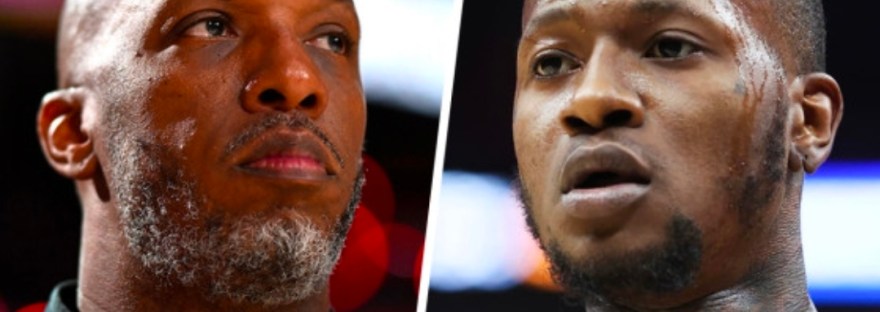
When basketball fans debate the greatest college basketball coach ever, a few names always come up. John Wooden, with his unmatched 10 national championships. Mike Krzyzewski, who became the all-time wins leader and collected five titles at Duke. Adolph Rupp, whose early dominance helped shape the sport. Yet for many, one man embodies the perfect balance of innovation, leadership, and integrity: Dean Smith.

Innovator of the Game

Smith wasn’t just winning games; he was reshaping how the sport was played. His famed “Four Corners Offense” frustrated opponents so much that it directly led to the shot clock. He emphasized team play, with every scorer pointing back to the passer—a simple yet powerful way to show gratitude. These principles became staples of basketball culture.

Wooden had his “Pyramid of Success,” Krzyzewski had his military-style discipline, but Smith’s philosophy was built on unselfishness and innovation, and that made his Tar Heels distinct.

Developing Players and People

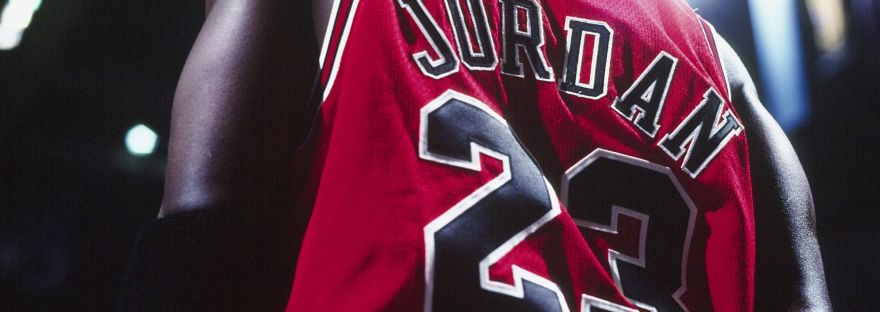
Smith’s track record of developing NBA talent speaks for itself—Michael Jordan, James Worthy, Sam Perkins, Vince Carter, Antawn Jamison, and countless others. But what truly set him apart was his commitment to developing people first. Nearly 96% of his players graduated, a number that dwarfs most of his coaching peers.

Krzyzewski built NBA stars like Kyrie Irving and Zion Williamson, while Wooden coached legends like Kareem Abdul-Jabbar and Bill Walton. Yet Dean Smith’s emphasis on character and education made his impact ripple well beyond the hardwood.

Wins, Banners, and Respect

By the time he retired in 1997, Smith had accumulated 879 wins, then the most in college basketball history. His résumé includes two national titles, 11 Final Four appearances, and 36 straight winning seasons.

Wooden may have more titles, Krzyzewski more wins, but no coach balanced excellence with integrity the way Smith did. His teams weren’t just successful—they were respected.

A Coach Who Took a Stand

What also separates Smith is his willingness to use his platform for something greater. In the 1960s, during a time of immense racial tension, he recruited Charlie Scott, the first Black scholarship athlete at UNC. He stood for integration and equality before it was widely accepted in the South.

Few coaches risked as much to do the right thing. Wooden was admired, Krzyzewski is celebrated, but Smith often led with courage beyond the game itself.

The Debate

So who really deserves the title of greatest college coach? Wooden’s dynasty at UCLA remains untouchable in terms of championships. Coach K’s consistency at Duke is legendary. But if you weigh innovation, player development, social impact, and sustained excellence, Dean Smith’s case becomes incredibly strong.


🏀 Now it’s your turn:
Do you think Dean Smith is the greatest college basketball coach ever? Or does Wooden’s dominance or Coach K’s longevity give them the edge? Share your thoughts—I’d love to hear where you stand in this debate.


Who’s the Best Quarterback in the NFL Right Now? Let’s Debate!

Quarterback is arguably the most scrutinized and celebrated position in football. Every throw, every decision, and every game can make or break a legacy. With so much talent in the league today, the question arises: who is truly the best quarterback in the NFL right now?

The Contenders

  • Patrick Mahomes (Kansas City Chiefs) – Known for his jaw-dropping arm talent, improvisational skills, and ability to perform under pressure. He’s already a Super Bowl champion and league MVP. But can anyone keep up with his highlight-reel plays week in and week out?
  • Joe Burrow (Cincinnati Bengals) – The Bengals’ signal-caller has risen to elite status with pinpoint accuracy and cool-headed leadership. Burrow commands a fast-paced offense and has led his team deep into the playoffs consistently.
  • Jalen Hurts (Philadelphia Eagles) – Hurts brings a dynamic dual-threat skill set that keeps defenses on their heels. His combination of rushing ability and improving passing game makes him a true matchup nightmare.
  • Josh Allen (Buffalo Bills) – Allen combines size, arm strength, and athleticism like few others. He can extend plays, make impossible throws, and terrorize defenses both in the air and on the ground.
  • Other Notables – Justin Herbert, Lamar Jackson, and Trevor Lawrence are also in the conversation, each bringing unique strengths and star potential.

What Makes a QB “The Best”?

Is it stats? Playoff wins? Leadership and intangibles? Or a mix of all three? Some fans prioritize clutch performances, others consistency over the long season. And then there’s the X-factor—those highlight plays that make you jump out of your seat.

The Debate Starts Here

We want to hear from you, the fans.

  • Who do you think is the best current NFL quarterback, and why?
  • Do you value arm talent over mobility, experience over potential, or playoff success above all else?
  • Can anyone dethrone Patrick Mahomes, or is the league entering a new era of multiple elite QBs?

Drop your picks, stats, and arguments in the comments. This is the ultimate QB debate, and your voice matters. Whether you’re Team Mahomes, Team Burrow, Team Hurts, or rooting for an underdog, the discussion is about to get heated.

Gridiron Dream

The whistle blows, the crowd takes flight,
Under autumn skies or Monday night.
From frozen fields to desert heat,
Eleven hearts, one goal to beat.

The roar of fans, the clash of pads,
The highs so sweet, the lows so bad.
Heroes rise and legends fall,
On painted grass, they give their all.

From rookies fresh with dreams to chase,
To grizzled vets who’ve set the pace,
Each yard hard-earned, each inch a fight,
Beneath the glare of stadium light.

And when the clock ticks down to none,
One team will stand, the war well-won.
A silver prize, the Lombardi gleam—The ultimate gridiron dream.

Is Jerry Jones About to Fumble Micah Parsons?

Micah Parsons says he’s done waiting. The Cowboys’ defensive superstar has requested a trade after contract talks went nowhere—talks that reportedly left his agent out and turned personal behind closed doors.

Parsons wants $200 million, which would make him the highest-paid non-QB in NFL history. Jerry Jones? He’s not budging, insisting Parsons honor his $24 million deal for 2025 and hinting he might franchise tag him in 2026.

So here’s the question:

  • Pay the man now and lock in a generational talent for the next decade?
  • Or hold the line and risk losing the most dominant defender Dallas has had since DeMarcus Ware?

With 50+ sacks in 63 games, Parsons is the engine of the Cowboys’ defense. Letting this turn into another drawn-out Dallas drama could cost more than money—it could cost a Super Bowl window.

Where do you stand—pay him or play hardball?

Michigan Hit with Historic Sign-Stealing Penalties

The NCAA has dropped the hammer on Michigan football, issuing one of the largest financial punishments in college sports history for its 2023 sign-stealing scandal.

The Wolverines avoided a postseason ban but were fined over $20 million, hit with scholarship cuts, recruiting restrictions, and four years of probation. Head coach Sherrone Moore will serve a three-game suspension and faces a two-year show-cause order, while former coach Jim Harbaugh received a 10-year show-cause, effectively keeping him out of college football until 2038. Former staffer Connor Stalions, the scheme’s alleged ringleader, got an eight-year show-cause.

Investigators say Michigan ran a multi-year, in-person scouting network that filmed opponents’ sideline signals in over 50 games. Evidence destruction and non-cooperation from staff worsened the penalties.

Michigan calls the ruling flawed and plans to appeal, but the scandal leaves a lasting mark on its championship legacy—and raises big questions about how far programs will go to win.

Was the punishment fair? Let me know what you think. Drop your thoughts in the comments.

Broadway Grit: Game Two

A Poetic Tribute to the Knicks Game 2 Victory

In Boston’s house, beneath bright light beams,
The Celtics dreamed their usual dreams.
Up twenty strong, the Garden roared—
But grit and heart can’t be ignored.

The Knicks, unfazed by hostile sound,
Chipped away, each quarter, a little ground.
With every board and hustle play,
They turned the tide and stole the lead away.

Josh Hart, a lion, fierce and bold,
His 23 made events unfold.
Brunson danced through traps and schemes,
His late free throws revived the dreams.

Then Bridges soared—a silent knight,
Fourteen in the fourth, all fight.
A final steal, like Broadway’s close,
He snatched the script and sealed the show.

Towns stood tall, rebounds in hand,
A double-double, firm and grand.
Together strong, they would not break,
New York balled out, for glory’s sake.

The Garden awaits, the crowd will roar,
As 2–0 tilts the tug-of-war.
From Boston’s pride, the crown they pry
The Knicks, they fight, they will not die.